Overall, I'm satisfied, yet very dissatisfied with the piece. I wish I had pushed the style further and had time to add even more details. I feel like the art nouveau doesn't convey me as an artist enough, although it was insanely challenging attempting to replicate this style. I am also more used to advertising graphic design, so to do something more illustrative was extremely straining. I'm just glad to have the project displayed for the final show, as I was confident that it did show off my skills as a graphic illustrator well enough.
Monday, November 25, 2013
Final Project Done!
After actually contemplating seppuku during the whole process, I finally filled in all of the missing details, colors, and shading on my piece. Although once again, unfortunately, I don't have any mid-process screenshots of the piece, my process was fairly simple and straightforward anyways. I first started by filling in large blocks of color (such as the background, circles couple, etc), and then slowly added the smaller details. I then went back and added the shading with a custom watercolor brush, trying to achieve the soft look associated with art nouveau.
Saturday, November 23, 2013
Response to Visual Symposium #11
This week's symposium covered creative writing and how they were common distinguished between poetry and prose. The lecture explored the many facets of thematic devices and elements used within both poetry and prose in order to communicate something to the reader. Although both writing styles can be used to convey possibly the same idea, prose relies more on diction and tone of the author, while poetry relies on the rhythm and sound of the words themselves.
The prose section of the lecture sought to defy the normal expectations of an A-B-A-B rhyme structure within lined poetry. It sought to illustrate how poets such as Tracie Morgan, uses repetition and rhythm in order to create emphasis, rather than word meaning themselves. Poetry has begun to defy many expectations of conventional form, using the placement of words on the page and syllables in key places in order to subtly affect the reader.
Leading the prose lecture, Professor Cyrus Console-Soican attempted to illustrate the blurred and faltering line between prose and poetry. He emphasized that it was not the structure that dictated the constraints for either style, but rather the subject matter: fact or fiction. In order to show this distinction to us, Cyrus showed us a video of Lydia Davis reading her book of short stories, Can't and Won't. Her writing style illustrated a lyrical, almost musical quality to her words that bordered upon poetry (when read aloud), but still retained the subject matters of prose.
The prose section of the lecture sought to defy the normal expectations of an A-B-A-B rhyme structure within lined poetry. It sought to illustrate how poets such as Tracie Morgan, uses repetition and rhythm in order to create emphasis, rather than word meaning themselves. Poetry has begun to defy many expectations of conventional form, using the placement of words on the page and syllables in key places in order to subtly affect the reader.
Leading the prose lecture, Professor Cyrus Console-Soican attempted to illustrate the blurred and faltering line between prose and poetry. He emphasized that it was not the structure that dictated the constraints for either style, but rather the subject matter: fact or fiction. In order to show this distinction to us, Cyrus showed us a video of Lydia Davis reading her book of short stories, Can't and Won't. Her writing style illustrated a lyrical, almost musical quality to her words that bordered upon poetry (when read aloud), but still retained the subject matters of prose.
Wednesday, November 20, 2013
Process of Final Project
Unfortunately I didn't take any good process photos or screenshots along the way (since I just kind of... go when it comes to my digital work. I tend to not enjoy the middle stages, so I forgot to document them). I only have one awful, blurry photo that I was taking with my phone to instagram (I know how to screenshot, I promise) and the initial sketches of the project I did in Photoshop.
The photo shows some of the line work and preliminary elements I had completed in the initial stages of the project.
Sunday, November 17, 2013
Research and Exploration Into the Final Project
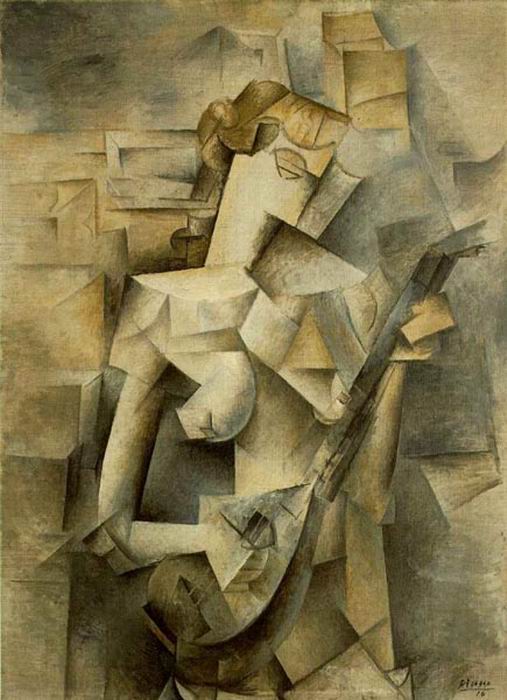
Before beginning my final, I extensively researched several art movements I was not familiar with, in hopes of being able to emulate their stylistic elements or messages. I first began researching Cubism, as I felt that it juxtaposed well with the concentric circles that were a recurring theme within my selected chapter of Einstein's Dreams. I thought it would been an interesting challenge to attempt to execute such a round, soft form using sharp, geometric angles and shapes within a digital medium.
However, I further researched Cubism, I came to a disappointing realization that I truly did not understand the execution or creative process of it. I realized that if I tried to emulate this style, it would ultimately fail. After this brief setback, Chris then told me to look into Constructivism, a movement I had not heard of before. Originating in Russia in 1919 and was the "rejection of autonomous art." I really enjoyed the placement of harsh geometric properties against a human subject, with strong, resounding text uniting the piece.
| "La Femme au Cheval" by Jean Metzinger |
| "Woman Playing Mandolin" by Pablo Picasso |
Despite my growing interest in this movement, I still wasn't sure if this was the look I desired. After researching this art movement further, I stumbled upon art nouveau. Although I had seen this style used by several artists before, I had never extensively looked into it before. I decided that with the soft, undulating curves and circles, this would be the style I wanted to use for my piece.
Friday, November 15, 2013
Response to Visual Symposium #10
Presented Miguel Rivera, this week's symposium covered the subject of printmaking and its familiarity among most practicing artists. Beginning with the history of Kansas City and its popularity with the medium, Rivera went on to elaborate how the styles of printmaking have integrated themselves with the aesthetic of the city.
Rivera then went on to provide examples of artists who had strong thematic statements using printmaking as their medium, such as Orit Hofshir's study of the detriments of erosion, to political awareness statements by other artists. The flexibility of the printmaking medium was emphasized, and how the medium transcends several boundaries of language and class in order to communicate effectively.
Monday, November 11, 2013
Proposed Schedule for Final Project
Following our reading of Einstein's Dreams, we were then required to select a chapter that was particularly poignant or interesting to us. Although several of us selected the same chapter as another person, there was no questions of plagiarism due to each of our individual ambitions. However, our ambitions had to limited with this project. Unlike our previous projects, we were restrained under a much shorter timeline. Previously we were given 3-4 weeks to complete each project. Unlike them, we only had 2 and a half weeks to fully plan and execute our final. In order to cope with with the limited time frame, we were required to create a schedule for ourselves, setting our own deadlines and goals.
Final Presentation of Personal Morals Prints
After putting our personal moral prints into our selected environment, we were then required to present our final products on ourselves and attend a photoshoot. We helped set up a grey backdrop in order to pose in front of, and then had Chris photograph us all.
Once the photoshoot was done, we then hung all of our final prints and fabric prints up in the gallery space to display our work.
Experimental Photo Shoot Putting Our Textile Designs Into Context
After creating the pattern and printing them onto our desired textiles, we were then required to do a photo shoot that put the entire personal moral, design, and concept into perspective. I attempted to make myself look worn out from studying and worrying about tests by covering my face with my art history book and surrounding myself with notes and quizzes.
Analyzation of Selected Chapter of "Einstein's Dreams"
Although robust with allegories, all concerning different facets of societies and its values, Einstein's Dreams by Alan Lightman has many chapters than can relate to its readers in a very personal, yet allegorical manner. In the particular "dream" explored in the chapter dated 14 May 1905, a fictional Einstein dreams about a world where a center of time exists. In that world, time moves in a circumvent, creating a center where time moves markedly slower. The dream explores the notions of those who would journey to that center, and the actions that take place there.
At that center of time, simple gestures can take an exponentially longer amount of physical time to execute. Quick, thoughtless actions such as "a brush of the hair might take a year" and when "a smile is returned, seasons pass in the outer world." While these mundane expressions typically register no lasting memories within a person, Lightman illustrates the effervescent quality of our existence and in everything we do. It may seem absurd to have when "a goodbye is said, cities crumble and are forgotten," but it causes the readers to stop and consider the significance and effects that each of our actions may have. While not attempting to cause us to proceed every action with overt carefulness and calculation, Lightman seeks to reveal how often we proceed through our daily lives with little to no thought or intent.
The exploration into adding meaning into fleeting moments is further emphasized by the point that the only people to venture into that center of time are "parents with children, and lovers." Vague at first in its connections with one another, points are quickly created between lovers and parents with children as the reader comes to a realization: both are doomed to pain through the impermanence of their relationship. By traveling to the center of time, the lovers and parents attempt to eternally capture the most elementary of gestures that bind their relationships together. The innocence of youth and the child that parents will forever cherish are frozen in the center of time as children will "never stop smiling the smile [they] smile now... never grow wrinkled or tired, will never get injured will never unlearn what [their] parents have taught her, will never think thoughts that [their] parents don’t know, will never know evil." This causes the reader to draw a personal connection with the dream and their own relationship with their parents, and the poignant importance to a parent of having a child that "will never tell [their] parents that she does not love them."
As with the relationship between parent and child, the affection between lovers is always transient, whether through emotional disconnections or physical separations. This causes the lovers to attempt the same sacrifice as the parents: forever capturing the short moments that create the intimacy of the relationship. Lovers travel to center of time to be seen "kissing in the shadows of buildings, in a frozen embrace that will never let go." While kissing and embracing are common, transitory actions within relationships, Lightman illustrates them as the physical manifestation of our emotions for our significant other, emphasizing the importance of putting through into such fleeting actions. At the center of time, there is no danger of the ephemeral. At the center of time, love is eternal because a lover "will never journey far from his lover, will never place himself in danger in self-sacrifice, will never fail to show his love, will never become jealous, will never fall in love with someone else."
At that center of time, simple gestures can take an exponentially longer amount of physical time to execute. Quick, thoughtless actions such as "a brush of the hair might take a year" and when "a smile is returned, seasons pass in the outer world." While these mundane expressions typically register no lasting memories within a person, Lightman illustrates the effervescent quality of our existence and in everything we do. It may seem absurd to have when "a goodbye is said, cities crumble and are forgotten," but it causes the readers to stop and consider the significance and effects that each of our actions may have. While not attempting to cause us to proceed every action with overt carefulness and calculation, Lightman seeks to reveal how often we proceed through our daily lives with little to no thought or intent.
The exploration into adding meaning into fleeting moments is further emphasized by the point that the only people to venture into that center of time are "parents with children, and lovers." Vague at first in its connections with one another, points are quickly created between lovers and parents with children as the reader comes to a realization: both are doomed to pain through the impermanence of their relationship. By traveling to the center of time, the lovers and parents attempt to eternally capture the most elementary of gestures that bind their relationships together. The innocence of youth and the child that parents will forever cherish are frozen in the center of time as children will "never stop smiling the smile [they] smile now... never grow wrinkled or tired, will never get injured will never unlearn what [their] parents have taught her, will never think thoughts that [their] parents don’t know, will never know evil." This causes the reader to draw a personal connection with the dream and their own relationship with their parents, and the poignant importance to a parent of having a child that "will never tell [their] parents that she does not love them."
As with the relationship between parent and child, the affection between lovers is always transient, whether through emotional disconnections or physical separations. This causes the lovers to attempt the same sacrifice as the parents: forever capturing the short moments that create the intimacy of the relationship. Lovers travel to center of time to be seen "kissing in the shadows of buildings, in a frozen embrace that will never let go." While kissing and embracing are common, transitory actions within relationships, Lightman illustrates them as the physical manifestation of our emotions for our significant other, emphasizing the importance of putting through into such fleeting actions. At the center of time, there is no danger of the ephemeral. At the center of time, love is eternal because a lover "will never journey far from his lover, will never place himself in danger in self-sacrifice, will never fail to show his love, will never become jealous, will never fall in love with someone else."
Turning Our Personal Morals Into Visual Representations
After extensively researching universal symbols for our personal values, we were then required to create our own. Although our symbols had to be understood by our peers in their universality, they also had to reflect our personal style and artistic voice. Our challenge with our logo then was to be able to create a pattern out of it.
Instead of the more peaceful, reverent images that I started off with to illustrate filial piety, I elected to chose a more sarcastic, caustic approach in my symbol to represent the experiences I had coping with overbearing expectations of filial piety as a child. My parents were extremely strict and expected me to do well in school no matter what. Using the more widely understood trope of the "tiger" parent, I combined it with hands holding pencils are chopsticks juxtaposed with the word "STUDY." The chopsticks illustrated how even during tasks such as eating, studying was always on my mind because of my parents. Plus it's just an easy symbol for Westerners to understand (lol).
After finalizing our designs for the patterns, our next challenge was to print the patterns onto wearable textiles. Although we could make the garments ourselves if we desired, I elected to use t-shirts because it would be easier to market to people that were interested.
Response to Visual Symposium #9
Headed by Steve Mays with several guest speakers, this week's symposium regarded Illustration and the many fields that this art practice expands into. Illustration, while commonly thought of just the simple practice of drawing, has grown to encompass many purposes, including public consumption, journalism, politics, corporations, and more. Illustration has grown past the boundaries of medium, allowing it to be created by almost everyone using anything. Most illustrations are meant to capture fleeting moments through formalist notions that are inherently lyrical. The visual manifestation of poetry, illustration is boundless and transitory.
Besides being personal expressions of style and visual poetry, illustration is a highly commercialized business. Illustrations appear in countless amounts of merchandise including calendars, corporate projects, government service projects, greeting cards, newsletters, in-house publications, and more. Despite the infinite range of products that illustration can serve, the most important aspects that affect illustration constantly remain perspective and lighting. While perspective can literally be defined to discuss the visual perspective of the artwork, it is also relevant in terms of the artist's vision and style. A lucrative tool, personal style can be used to define and artist's repertoire and allow them to be noticed within the artistic community.
Friday, November 8, 2013
Response to Visual Symposium #8
Headed by Pauline Ferb, this week's symposium went over the ancient craft of fibers, and how through time, the boundaries between what are and aren't fiber works have begun to blur. This lack of barriers that once previously confined fibers to textile and weaving has been almost wholly removed due to the speed at which material rapidly develops.
Fiber materials has come to encompass textiles and the material studies that surround it. The emphasis is greatly placed upon the study and creation of fiber strands. Control over the fiber strands would be achieved through the handmaking process, including fibers for paper, animal felts, and more. The study of fiber material has also come to encompass the ever expanding use of fiber in unconventional scenarios. Materials, such as felt, are being used in large buildings in order to control noise.
But other than the study of the materials of the fiber, the most important aspect of fiber work is the process of creating the work. Because of its flexibility, many fibers artists are concerned with wind, movement, and the passage of time. Subjects have been juxtaposed for unique and contrasting effects, such as the placement of lace against software rendered fibers. Fibers can now be rendered using 3D sintering, which allows for a special powder to be fused together into fibers layer by layer. This allows for synthetic fibers, such as glowing conductive threads and programmable nitinol to be created.
Fiber materials has come to encompass textiles and the material studies that surround it. The emphasis is greatly placed upon the study and creation of fiber strands. Control over the fiber strands would be achieved through the handmaking process, including fibers for paper, animal felts, and more. The study of fiber material has also come to encompass the ever expanding use of fiber in unconventional scenarios. Materials, such as felt, are being used in large buildings in order to control noise.
But other than the study of the materials of the fiber, the most important aspect of fiber work is the process of creating the work. Because of its flexibility, many fibers artists are concerned with wind, movement, and the passage of time. Subjects have been juxtaposed for unique and contrasting effects, such as the placement of lace against software rendered fibers. Fibers can now be rendered using 3D sintering, which allows for a special powder to be fused together into fibers layer by layer. This allows for synthetic fibers, such as glowing conductive threads and programmable nitinol to be created.
Thursday, October 24, 2013
Pumpkin Carving for the Local Community
For the past 2 days in class, we have been carving pumpkins that are to be displayed at the Crestwood Shops on 55th Street between Oak St. and Brookside Blvd. Although we were given quite an amount of freedom with the pumpkins, we were required to use patterns that we saw in our previous nature exploration project. We were able to use other classmate's patterns if we desired. I used the hexagonal patterns I saw in the chicken wire from my project, and proceeded to carve multiple chambers. I took inspiration of a spiral pattern from a follow classmate, as well as the circle in the middle of the chambers from another classmate.
![]() |
| Photo courtesy of KansasCity.com |
Sketches on Chosen Moral Value
Earlier last week, we took a little class field trip and were required to sketch a sculpture from the Nelson-Atkins Museum of Art. There, I had sketched the sculpture of Guanyin of the Southern Seas, a fired clay sculpture of a Buddhist deity. Over the weekend, we were ask to choose a moral value that was important to us and create 12 sketches of it. I chose filial piety, which is the respect of one's parents and elders. Using this value, I was able to easily tie it in with my sculpture of Guanyin, since filial piety is an aspect of Buddhism.
After I received some critiques over my pieces, I was told to universalize the sketches I had drawn. Since I didn't expect most westerners to understand the concept of filial piety, I decided to put it into terms that they could understand: Asian stereotypes of strict parents and overly appeasing children of those parents. We were then asked to compose 6 sketches that illustrated what we had learned from the critique.
Thursday, October 17, 2013
Photographs of the Final Nature Abstraction Project
With our project finally finished, all that was left was for it to be presented and photographed correctly. As a class, we worked together to completely clear the room of debris and unneeded tables in order to create a gallery space. This allowed our projects to be displayed in a professional, yet enjoyable manner.
After completely setting up our final pieces, we were then required to photograph our projects with close attention to digital craftsmanship. I attempted to make my piece as clean as possible by brushing off excess dirt and rolling it with a lint roller. I then proceeded to alter the lighting in order to emphasize the subtle wire netting that was vital to the form of the pieces. Finally, after thoroughly photographing my piece, I then took my selected 10 photos and edited them in Photoshop using cropping, color correction, and clone stamping.
Wednesday, October 16, 2013
Explanation of My Process Throughout the Nature Abstraction Project
An intensively thorough and explorative process, our latest sculpture project required over three weeks worth of work and an innumerable amount of obstacles to overcome. In the initial stages of our project, we were required to sit outside and sketch various forms, structures, and patterns that we saw throughout nature. Originally, I began sketching a stout tree with round, sloping branches because I appreciated the form and symmetry I saw in the shape of the tree. However, the tree soon became an overbearing task to draw, so I attempted to focus on a single leaf from the tree. I soon moved on from the leaf because I did not find interest within the leaves. After sketching several other natural forms, I was presented with a discarded banana peel on the ground. This allowed me to completely shift my thinking, and consider the vast amount of patterns found beyond the space I was currently in. I then realized an infinite plethora of structures and patterns lie within organic objects that I overlooked every day.
Although I believed I had been aware of the many elements of design in both man-made and organic objects, this project further strengthened my appreciation for the fine details able to be observed in almost everything. Still within my illustrative comfort zone, the next stage of the project required us to acquire two other natural forms and sketch them as observantly as possible. At this stage, I selected a bell pepper and orange due to my heightened awareness of the interesting details available in both objects. Using a knife, I dissected both objects in almost every way possible. I sought to observe my objects at almost every available angle, including how cutting it at various angles affected the patterns they created with their interior. This particular process of cutting my objects in various ways allowed me to consider how this could apply to my everyday life of approaching problems and solutions. Depending on how I approached a problem, reaching the solution could either be very simple or become extensively complex.
Our broad observation of our objects was soon challenged when we were told to select only of our objects and focus on a very specific pattern or structure within it. The sudden shift on focuses was very refreshing for me, as I had become tired of drawing the orange I had also selected at this point. This focus allowed me to realize that the problems I were experiencing at that stage were akin to the problems in my life; I was trying to introduce too many elements into my artwork and life at once. Focusing on my object allowed me to become more sensitive to the details found in very specific aspects of the bell pepper, such as the large chambers and linear lines of seeds. The chambers especially interested me because of how they served the pepper: not only did they provide the pepper with its main form, but it served to house and protect the seeds of the bell pepper itself. I found that within each bell pepper, its chambers were distinctly different and changed into several different shapes when cut at various angles. Bisected horizontally, the chambers of the bell peppers formed four distinct shapes around a diamond center with a star shape in the middle. The symmetry of the whole system was quite beautiful, and allowed me to contemplate on nature's efforts to create organized systems in which to thrive.
After largely studying the structures and patterns within our objects, we were then required to sketch more objects that had forms similar to those we saw in our object. Because I had focused on the chambers in my bell pepper, I attempted to find similar objects with chambers, such as the human heart, tomatoes, durians, and chili peppers. This allowed me to see how nature often echoed forms within objects because of its natural realization of the efficacy of certain structures. Within the tomatoes, I found that the chambers served a similar purpose of protecting the seeds of the vegetable, much like in the bell pepper. However, the chambers in the tomato were not hollow like the in the bell peppers. Instead, I observed this hollowness within the chambers of the human heart, despite them not serving a purpose similar to that of the bell peppers'. The chambers in the human heart served to facilitate blood rather than protect something. After the disparity between the human heart and tomato, I returned to fruits and vegetables and selected the durian and chili peppers, whose chambers served to protect the procreative aspects of the object. Despite being able to find several objects with similar objects, this particular stage frustrated me because I had struggled to think of other things with such observable chambers such as the bell peppers, that were not in the pepper family themselves. This frustration had led me to picking a chili pepper as crutch.
Despite slight frustrations with the sudden vastness of the project once again, we were then allowed to refocus on the main structures of our selected objects. Using line and shading, we were required to begin abstracting our objects, all the while maintaining the conceptual integrity of the depth and line of the object. I experimented with various line patterns inside of the chambers of my bell pepper, but struggled to abstract the shape of the bell pepper itself. All I seemed to be able to do was abstract the forms within the chambers, while forcing them into the perceivable frame of the bell pepper. I allowed this crippling comfort to pervade into the next iteration of the project, which was to create paper sculptures of the abstracted forms. In an attempt to somewhat abstract the frame of the bell pepper, I elevated it on small stands made of poster board. I then used paper in different shades of grey and elevated at different heights in order to create the illusion of depth and draw parallels to the chambers in the bell peppers. Although using colors completely different from the vast array of colors found within bell peppers, the object remained readily identifiable as a bell pepper. This frustrated me greatly, as I had little experiencing in abstracting forms and often worked with easily recognizable objects.
Even with my frustration due to my lack of vast abstraction, I was then able to draw some ideas from some of my previous sketches. In my previous attempts at creating abstract patterns within the bell peppers, I had created a melting form by varying line weight. This gave me the idea creating a painting of chambers with a structure melting out from it. I soon realized that this idea was far too audacious, as I had little experience in painting with heavy paints. Cost constraints soon came into play as I realized that creating this believable melting form out of a framed painting would become overbearing for me. After discarding the framed aspect of the piece, I constructed the wire frame of the melting objects, and cut out various holes within the wire frame in order to fit chambers within the frame. My original idea for the frame was to create the whole melting object, create its chambers out of wire, and then cover the whole frame with some material that would hug the frame and draw emphasis on the chambers. However, after much deliberation over using either plaster or paper mache, I instead opted for cloth due to suggestions. To my dismay, the cloth did not hug the frame as well as I had hoped, and completely obscured all of the arduous work I had put into creating the wire frame. I had also attempted to paint the cloth red in the chambered areas in order to draw emphasis to their depth, but that caused the cloth to look bloody and overall displeasing. This part completely frustrated me and caused me to rethink my project. Instead, I opted for the black cloth to be the backdrop of the wire frame, and have the wires of the chambers to be wrapped in colors to create emphasis and depth.
Before proceeding with wrapping the chamber frames with colored yarn, I had spray painted the frame of the main form black in order to cover the garish and distracting silver of the original wire. I had been originally ambivalent with spray painting the wire due to my fear of it being lost against the black backdrop. I soon realized that without experimentation, I would never progress in the project, and within my life as well. After spray painting the form black, I realized that it created a very subtle and attractive contrast against the black backdrop. I then proceeded to wrap of my frames with colored yarn. This step was particularly frustrating because I realized that it consumed an inordinate amount of time, and caused my arm to become very tired. But through working against my irritation, I realized that if I simply gave up at every obstacle then I would never produce anything of significance within my life. I worked through the irritation at the constantly tangling, fraying, and unraveling yarn in order to bring color to my piece. After completing the wrapping, I then remounted the chambers onto the form, and thus completing my art piece.
By forcing myself out of my comfort zone in terms of materials and processes, I realized that the many principles I apply while creating my art could be related to my life somehow. It caused me to become resilient in the face of displeasure, and that the first iterations of projects may not always be the best or final projects. I had never realized the importance of trial and error before this project, and this will definitely cause me to allow more time and mistakes with myself when creating future artworks.
Although I believed I had been aware of the many elements of design in both man-made and organic objects, this project further strengthened my appreciation for the fine details able to be observed in almost everything. Still within my illustrative comfort zone, the next stage of the project required us to acquire two other natural forms and sketch them as observantly as possible. At this stage, I selected a bell pepper and orange due to my heightened awareness of the interesting details available in both objects. Using a knife, I dissected both objects in almost every way possible. I sought to observe my objects at almost every available angle, including how cutting it at various angles affected the patterns they created with their interior. This particular process of cutting my objects in various ways allowed me to consider how this could apply to my everyday life of approaching problems and solutions. Depending on how I approached a problem, reaching the solution could either be very simple or become extensively complex.
Our broad observation of our objects was soon challenged when we were told to select only of our objects and focus on a very specific pattern or structure within it. The sudden shift on focuses was very refreshing for me, as I had become tired of drawing the orange I had also selected at this point. This focus allowed me to realize that the problems I were experiencing at that stage were akin to the problems in my life; I was trying to introduce too many elements into my artwork and life at once. Focusing on my object allowed me to become more sensitive to the details found in very specific aspects of the bell pepper, such as the large chambers and linear lines of seeds. The chambers especially interested me because of how they served the pepper: not only did they provide the pepper with its main form, but it served to house and protect the seeds of the bell pepper itself. I found that within each bell pepper, its chambers were distinctly different and changed into several different shapes when cut at various angles. Bisected horizontally, the chambers of the bell peppers formed four distinct shapes around a diamond center with a star shape in the middle. The symmetry of the whole system was quite beautiful, and allowed me to contemplate on nature's efforts to create organized systems in which to thrive.
After largely studying the structures and patterns within our objects, we were then required to sketch more objects that had forms similar to those we saw in our object. Because I had focused on the chambers in my bell pepper, I attempted to find similar objects with chambers, such as the human heart, tomatoes, durians, and chili peppers. This allowed me to see how nature often echoed forms within objects because of its natural realization of the efficacy of certain structures. Within the tomatoes, I found that the chambers served a similar purpose of protecting the seeds of the vegetable, much like in the bell pepper. However, the chambers in the tomato were not hollow like the in the bell peppers. Instead, I observed this hollowness within the chambers of the human heart, despite them not serving a purpose similar to that of the bell peppers'. The chambers in the human heart served to facilitate blood rather than protect something. After the disparity between the human heart and tomato, I returned to fruits and vegetables and selected the durian and chili peppers, whose chambers served to protect the procreative aspects of the object. Despite being able to find several objects with similar objects, this particular stage frustrated me because I had struggled to think of other things with such observable chambers such as the bell peppers, that were not in the pepper family themselves. This frustration had led me to picking a chili pepper as crutch.
Despite slight frustrations with the sudden vastness of the project once again, we were then allowed to refocus on the main structures of our selected objects. Using line and shading, we were required to begin abstracting our objects, all the while maintaining the conceptual integrity of the depth and line of the object. I experimented with various line patterns inside of the chambers of my bell pepper, but struggled to abstract the shape of the bell pepper itself. All I seemed to be able to do was abstract the forms within the chambers, while forcing them into the perceivable frame of the bell pepper. I allowed this crippling comfort to pervade into the next iteration of the project, which was to create paper sculptures of the abstracted forms. In an attempt to somewhat abstract the frame of the bell pepper, I elevated it on small stands made of poster board. I then used paper in different shades of grey and elevated at different heights in order to create the illusion of depth and draw parallels to the chambers in the bell peppers. Although using colors completely different from the vast array of colors found within bell peppers, the object remained readily identifiable as a bell pepper. This frustrated me greatly, as I had little experiencing in abstracting forms and often worked with easily recognizable objects.
Even with my frustration due to my lack of vast abstraction, I was then able to draw some ideas from some of my previous sketches. In my previous attempts at creating abstract patterns within the bell peppers, I had created a melting form by varying line weight. This gave me the idea creating a painting of chambers with a structure melting out from it. I soon realized that this idea was far too audacious, as I had little experience in painting with heavy paints. Cost constraints soon came into play as I realized that creating this believable melting form out of a framed painting would become overbearing for me. After discarding the framed aspect of the piece, I constructed the wire frame of the melting objects, and cut out various holes within the wire frame in order to fit chambers within the frame. My original idea for the frame was to create the whole melting object, create its chambers out of wire, and then cover the whole frame with some material that would hug the frame and draw emphasis on the chambers. However, after much deliberation over using either plaster or paper mache, I instead opted for cloth due to suggestions. To my dismay, the cloth did not hug the frame as well as I had hoped, and completely obscured all of the arduous work I had put into creating the wire frame. I had also attempted to paint the cloth red in the chambered areas in order to draw emphasis to their depth, but that caused the cloth to look bloody and overall displeasing. This part completely frustrated me and caused me to rethink my project. Instead, I opted for the black cloth to be the backdrop of the wire frame, and have the wires of the chambers to be wrapped in colors to create emphasis and depth.
Before proceeding with wrapping the chamber frames with colored yarn, I had spray painted the frame of the main form black in order to cover the garish and distracting silver of the original wire. I had been originally ambivalent with spray painting the wire due to my fear of it being lost against the black backdrop. I soon realized that without experimentation, I would never progress in the project, and within my life as well. After spray painting the form black, I realized that it created a very subtle and attractive contrast against the black backdrop. I then proceeded to wrap of my frames with colored yarn. This step was particularly frustrating because I realized that it consumed an inordinate amount of time, and caused my arm to become very tired. But through working against my irritation, I realized that if I simply gave up at every obstacle then I would never produce anything of significance within my life. I worked through the irritation at the constantly tangling, fraying, and unraveling yarn in order to bring color to my piece. After completing the wrapping, I then remounted the chambers onto the form, and thus completing my art piece.
By forcing myself out of my comfort zone in terms of materials and processes, I realized that the many principles I apply while creating my art could be related to my life somehow. It caused me to become resilient in the face of displeasure, and that the first iterations of projects may not always be the best or final projects. I had never realized the importance of trial and error before this project, and this will definitely cause me to allow more time and mistakes with myself when creating future artworks.
Monday, October 14, 2013
Response to Visual Symposium #7
Presented by Cary Esser and Paul Donnelly, this week's symposium was over ceramics and its impact within the artistic community. Made with one of the most common resources to be found, ceramics has a long history, including being tied in with the development of written language. The popularity of ceramics has long been associated with its ability to reflect the familiarity of life; it represents material comfort. Although ceramics have many facets, but most can be covered by aesthetic, social, historical, economic, cultural, and political views.
Ceramics has gone beyond its simple identities of pots and kitchenware, into being put through many different uses. Although it creates a sense of unity through the commonality of dirt, ceramics has been used due to its durability and protectiveness. Ceramics have been used many times as sanitary objects (i.e. toilets, sinks), but also have more profound appearances (such as being carriers of narratives). Ceramics has become symbolic in art as reflecting the familiarity of life because it often illustrates material comfort. Often times used as decorations, they mediate our living environment by creating boundaries between society and the wild.
Despite having so much breath in the meaning of the clay itself, ceramic also carries symbolism within its form as the vessel. Artistic revolutions have occurred through the design of certain styles and techniques of creating ceramics. Albeit the artistic revolutions, the vessel of ceramics will always create a connection from the creator to its viewer through handiwork, which allows for originality among pieces. The processes of creating ceramics will always draw a connection back to nature, which allows for branching within original techniques, yet draw off of a domestic comfort that plays off of the mediocrity of clay. However, due to the commonality of clay, ceramics has become a popular medium to link activism and social awareness with. The clay allows the layering of irony and social paradoxes or destroyed to illustrate their impermanence. But most importantly, once again due to the accessible nature of clay, ceramics has its original roots in consumerism and mass production.
Ceramics has gone beyond its simple identities of pots and kitchenware, into being put through many different uses. Although it creates a sense of unity through the commonality of dirt, ceramics has been used due to its durability and protectiveness. Ceramics have been used many times as sanitary objects (i.e. toilets, sinks), but also have more profound appearances (such as being carriers of narratives). Ceramics has become symbolic in art as reflecting the familiarity of life because it often illustrates material comfort. Often times used as decorations, they mediate our living environment by creating boundaries between society and the wild.
Despite having so much breath in the meaning of the clay itself, ceramic also carries symbolism within its form as the vessel. Artistic revolutions have occurred through the design of certain styles and techniques of creating ceramics. Albeit the artistic revolutions, the vessel of ceramics will always create a connection from the creator to its viewer through handiwork, which allows for originality among pieces. The processes of creating ceramics will always draw a connection back to nature, which allows for branching within original techniques, yet draw off of a domestic comfort that plays off of the mediocrity of clay. However, due to the commonality of clay, ceramics has become a popular medium to link activism and social awareness with. The clay allows the layering of irony and social paradoxes or destroyed to illustrate their impermanence. But most importantly, once again due to the accessible nature of clay, ceramics has its original roots in consumerism and mass production.
Monday, October 7, 2013
Representation of Structure Through Media Exploration
For the next step of our structural exploration project, we were then allowed to use any media we desired in order to represent our structures in a further abstracted form. I chose to work with wire, cloth, and paint in an attempt to represent the chambers I found within my original bell peppers.
Response to Visual Symposium #6
This week's visual symposium was the painting presentation, which followed the creation and evolving definition of what is considered "painting." Breaking down the presentation into 7 different subtopics, the presentation illustrated how painting has become an almost abstract term in order to describe artwork that can be viewed or created through a painterly process.
The first subtopic of painting was the existential conscious. Often times, art becomes an area where the subconscious mind vents, but painting was one of the first mediums to allow us to do so. Paintings often attempt to illustrate how life is brutal, brief, and beautiful, and how all those combined experiences make each life unique. Those experiences also allow us to interpret each painting in a unique experience. The second subtopic of painting was optics, and how painting was one of the first mediums to depict the optic phenomenon. By exploring the scientific nature of how the eye works, painting creates illusions of depth and space. The third subtopic of painting was narrative, and how paintings often attempt to tell stories of smallness, tragedy, and pain. The style in which the artists paints in also gives a narrative of their self.
The fourth subtopic of painting was site specialty, or the understanding of how one's work interacts with the space it's in. The role a work can play in its place is extremely crucial, especially following subconsciously understood allegories of light/dark for good/evil within a room. The fifth subtopics, politics, is a fairly self-explanatory topic of painting which spans the current political issues of the time represented in paintings. The sixth subtopic, materials, covered how paint can become a metaphor for texture, age, and various other things. Often times, paint is not used simply to convey that it is paint, but rather to depict other objects. Finally, the last subtopic, craft, covered how things beyond the painting canvas can be viewed through painterly lens, and how that can change the way they are created/perceived.
All in all, it was a very riveting presentation, with several good examples for each subtopic. The presenters were enthusiastic during the speeches, and provided clear, concise examples of each subtopic. This allowed for a clear understand and appreciation of painting, as well as its many facets.
The first subtopic of painting was the existential conscious. Often times, art becomes an area where the subconscious mind vents, but painting was one of the first mediums to allow us to do so. Paintings often attempt to illustrate how life is brutal, brief, and beautiful, and how all those combined experiences make each life unique. Those experiences also allow us to interpret each painting in a unique experience. The second subtopic of painting was optics, and how painting was one of the first mediums to depict the optic phenomenon. By exploring the scientific nature of how the eye works, painting creates illusions of depth and space. The third subtopic of painting was narrative, and how paintings often attempt to tell stories of smallness, tragedy, and pain. The style in which the artists paints in also gives a narrative of their self.
The fourth subtopic of painting was site specialty, or the understanding of how one's work interacts with the space it's in. The role a work can play in its place is extremely crucial, especially following subconsciously understood allegories of light/dark for good/evil within a room. The fifth subtopics, politics, is a fairly self-explanatory topic of painting which spans the current political issues of the time represented in paintings. The sixth subtopic, materials, covered how paint can become a metaphor for texture, age, and various other things. Often times, paint is not used simply to convey that it is paint, but rather to depict other objects. Finally, the last subtopic, craft, covered how things beyond the painting canvas can be viewed through painterly lens, and how that can change the way they are created/perceived.
All in all, it was a very riveting presentation, with several good examples for each subtopic. The presenters were enthusiastic during the speeches, and provided clear, concise examples of each subtopic. This allowed for a clear understand and appreciation of painting, as well as its many facets.
Structures Turned Into 3D Forms
Following the study with shading and line weight, we were then required to express our found structures and patterns in a 3D form. We were first required to create small, paper mock-ups of what our next step possibly could be. This step was use mainly for experimentation and exploration.
After creating the small, paper mock-ups, we were then required to create the objects in as large of a scale as we pleased. The only constraint placed on this step of the project was that we were only allowed to use paper as our medium. This exercise sought to illustrate the constraints placed on artists due to mediums, or how to overcome those boundaries.
Attempt of Abstraction In Found Patterns
After selecting a pattern or structure to focus on within our objects, we were then asked to continue exploring the patterns through line and shading. Before shading or using line weight to create movement/draw emphasis, we were required to abstract our objects as much as possible. Then, picking our most successful abstractions, we had to use varying line weights to add interest, and then use only shading to create depth.
Response to Visual Symposium #5
Due to the presenters of the animation visual symposium not showing up, we were lectured by Brett Reif on the "Alternate Avenue Into Modern Art." Brett's lecture explored the thought of how all artists manufacture art, regardless of era, to be as real as possible.
A somewhat controversial view, the lecture illustrated no matter how abstracted or disproportionate an artwork may be, it can be seen as "realistic" as it represents the artists' interpretation of reality. Such an example can be seen in Michelangelo's "David," where David's hands are disproportionately large when viewed directly straight on. However, since David is on a pedestal and is viewed at an angle, Michelangelo sculpted David's hands to be larger so that it could be viewed "realistically" from the angle of its audience. Often times, works would often reflect the "realities" of their time periods in many different ways. Baroque artwork was indicative of whimsical, frivolous lifestyle lead by the monarchy. However, art eras generally reject the previous eras, as seen in Neo-Classical art; geometric lines and solid portraiture rejected the fanciful poses and pastel colors of the Baroque style.
Photography would then be one of the greatest opponents to the portrayed "reality" found within artworks by simply capturing an image. Despite this obstacle, artists still found missing elements within photography and challenged it to become more abstract in order to capture the missing realities. This would lead into the world of abstraction and cubism, where artists would attempt to express in art how the brain's generalized what it perceived. Abstraction would then be further pushed into surrealism, which dealt with the subconscious reality of dreams.
Although some artworks may seem abstract or irregular, it can be argued that all artwork is "realistic" because they depict how the artist perceives their reality. The differences in perception is what allows artwork to be unique, appeal to various audiences, and even possibly cause artistic movements.
A somewhat controversial view, the lecture illustrated no matter how abstracted or disproportionate an artwork may be, it can be seen as "realistic" as it represents the artists' interpretation of reality. Such an example can be seen in Michelangelo's "David," where David's hands are disproportionately large when viewed directly straight on. However, since David is on a pedestal and is viewed at an angle, Michelangelo sculpted David's hands to be larger so that it could be viewed "realistically" from the angle of its audience. Often times, works would often reflect the "realities" of their time periods in many different ways. Baroque artwork was indicative of whimsical, frivolous lifestyle lead by the monarchy. However, art eras generally reject the previous eras, as seen in Neo-Classical art; geometric lines and solid portraiture rejected the fanciful poses and pastel colors of the Baroque style.
Photography would then be one of the greatest opponents to the portrayed "reality" found within artworks by simply capturing an image. Despite this obstacle, artists still found missing elements within photography and challenged it to become more abstract in order to capture the missing realities. This would lead into the world of abstraction and cubism, where artists would attempt to express in art how the brain's generalized what it perceived. Abstraction would then be further pushed into surrealism, which dealt with the subconscious reality of dreams.
Although some artworks may seem abstract or irregular, it can be argued that all artwork is "realistic" because they depict how the artist perceives their reality. The differences in perception is what allows artwork to be unique, appeal to various audiences, and even possibly cause artistic movements.
Tuesday, September 24, 2013
Study of Pattern and Structure Within Objects
Continuing from our original studies of our selected objects, our class was instructed to observe and pattern and structure within the objects. From this guideline, we were asked to sketch the objects again, but this time emphasizing the pattern and structure. We then had to select 1 out of the 2 objects we had brought, and focus on a certain aspect of the object. Out of the bell pepper and orange, I selected the bell pepper. I decided to focus on the "chambers" within the pepper itself, and how those chambers house and protect the seeds of the bell pepper.
After closely studying the structure of our objects through observation and drawing, we were instructed to find objects with similar structures as homework. Focusing on the "chamber" aspect of the bell pepper, I sought out other objects with chambers or deep rivets in which they housed what they used to procreate with. From that, I chose the human heart, jalapenos, durians, and tomatoes.
Monday, September 23, 2013
Outdoor Nature Studies and Observation Sketches of Selected Items
After enduring grueling hours of cutting paper and revising and editing within Adobe Illustrator, it was quite refreshing to have our next assignment take place outdoors. Deviating away from the rigidity of X-Acto knives and the pen tool, we were required to sketch organic forms found in nature. Our focus was to find patterns and observe the structure of the objects.
Once finished with our nature sketches, our homework was to then obtain 2 objects and create a series of observation sketches. I chose to sketch an bell pepper and an orange. After doing a focused 45 minute drawing/shading of the objects, I then focused on the line and details found within my objects.
Subscribe to:
Posts (Atom)